- Highest rated by the BusinessRate Powered by Google.
- Most reviewed in Tulsa, Oklahoma metropolitan area.

Brett P. Phillips
President, Economics, Inc.
Certified Financial Master Coach
N.A.I.C.S. 541611 Consultant
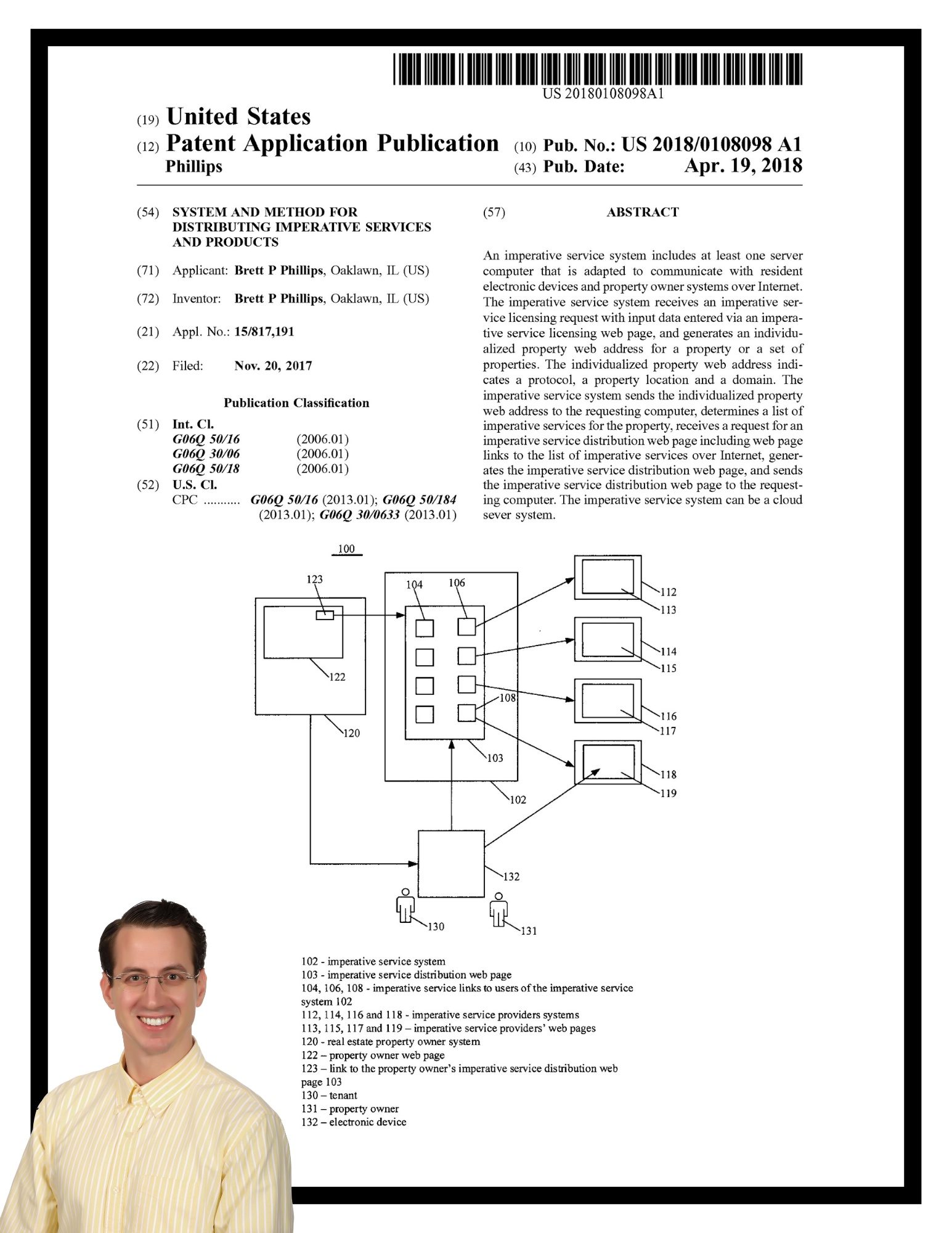
Registered Inventor, U.S. Patent Office US 2018/0108098 A1






What are people saying?
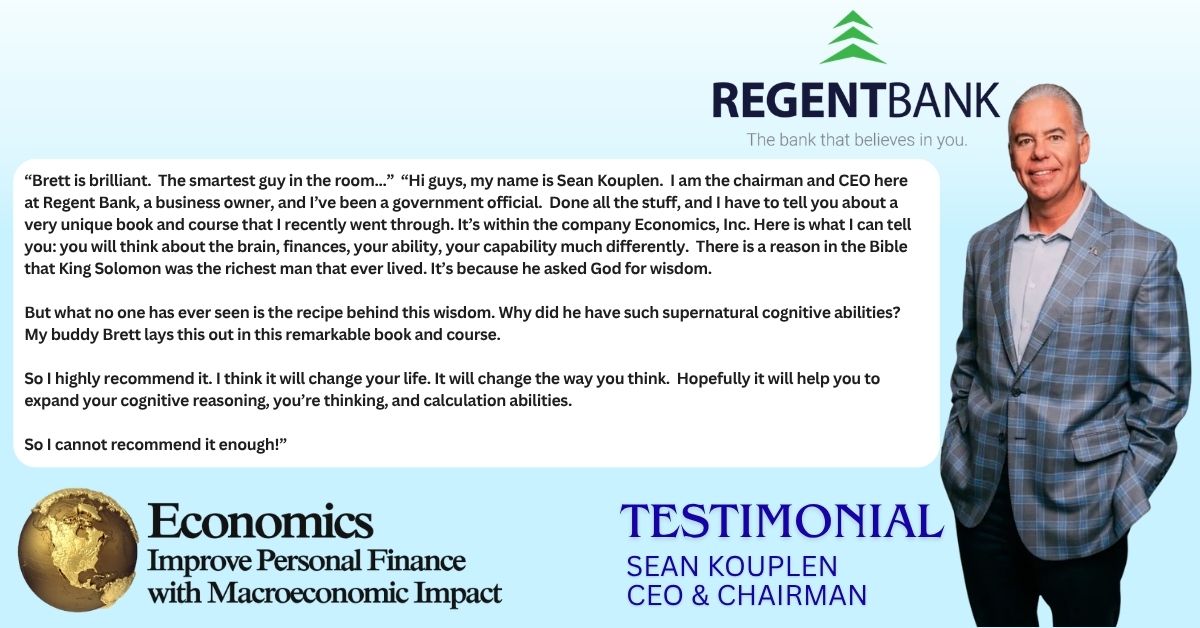
Testimonial from Sean Kouplen
Mr. Kouplen, Chairman and CEO of Regent Bank is God’s gift to our community and global economy. Mr. Kouplen has served as President of the Company since April 1, 2008, and is one of the principal organizers of Regent Capital Corporation. He is also the Chairman of the Board of Directors, President, and Chief Executive Officer of Regent Bank. He serves on the Executive Loan Committee, the Strategic Planning-Executive Committee, and the Nominating and Governance Committee. Mr. Kouplen previously served as Oklahoma’s Secretary of Commerce & Workforce Development and holds many local and statewide leadership positions. To connect with Mr. Kouplen and support his noble work for our community and nation, please visit: www.Regent.bank | www.94xmovement.org | www.FaithinBusinessSeries.com
5 Step Plan & Macroeconomic Movement
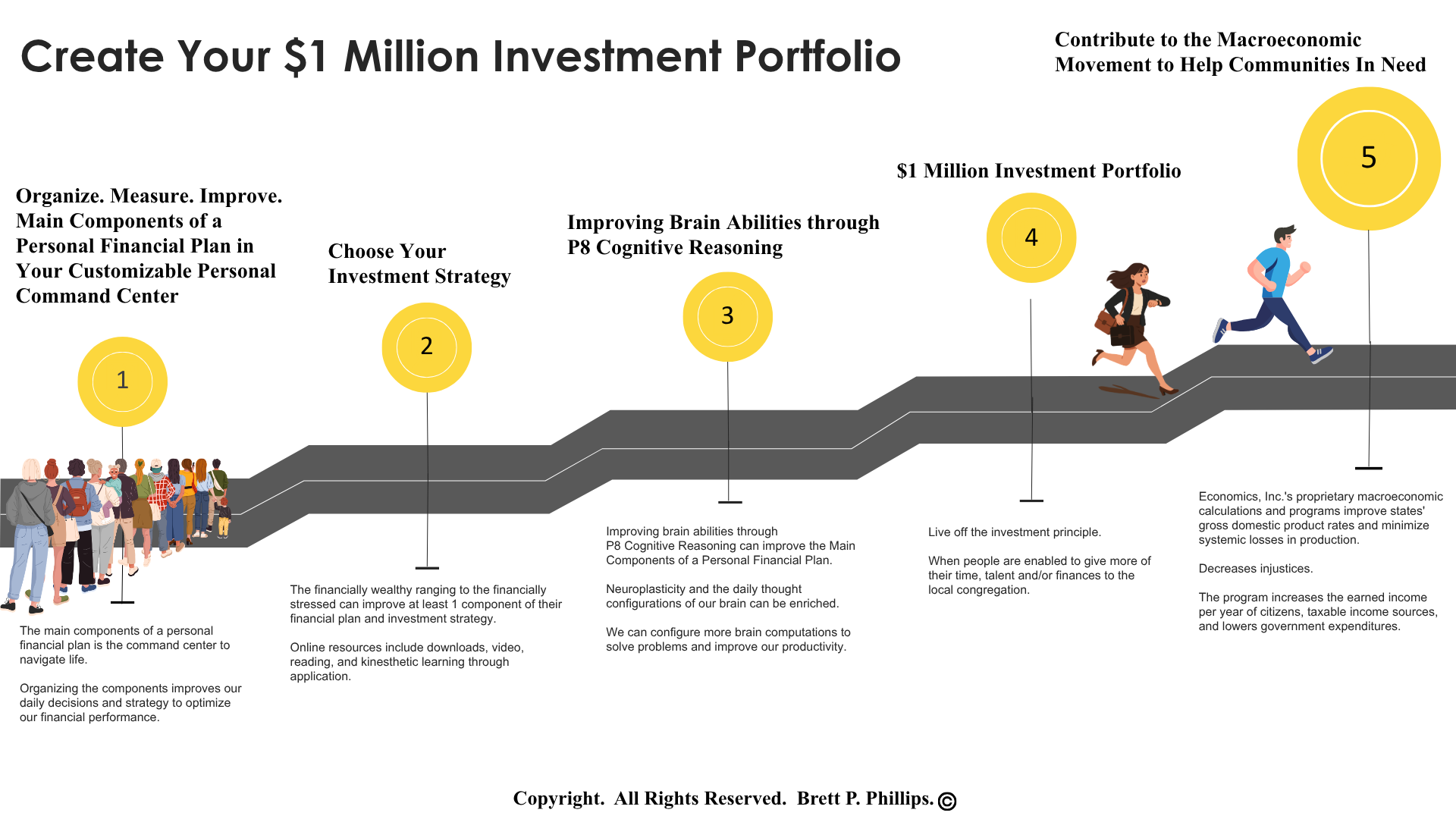
Your Personal Financial Command Center (c)

What is in Your Personal Financial Command Center (c) ?
Free Self Assessment
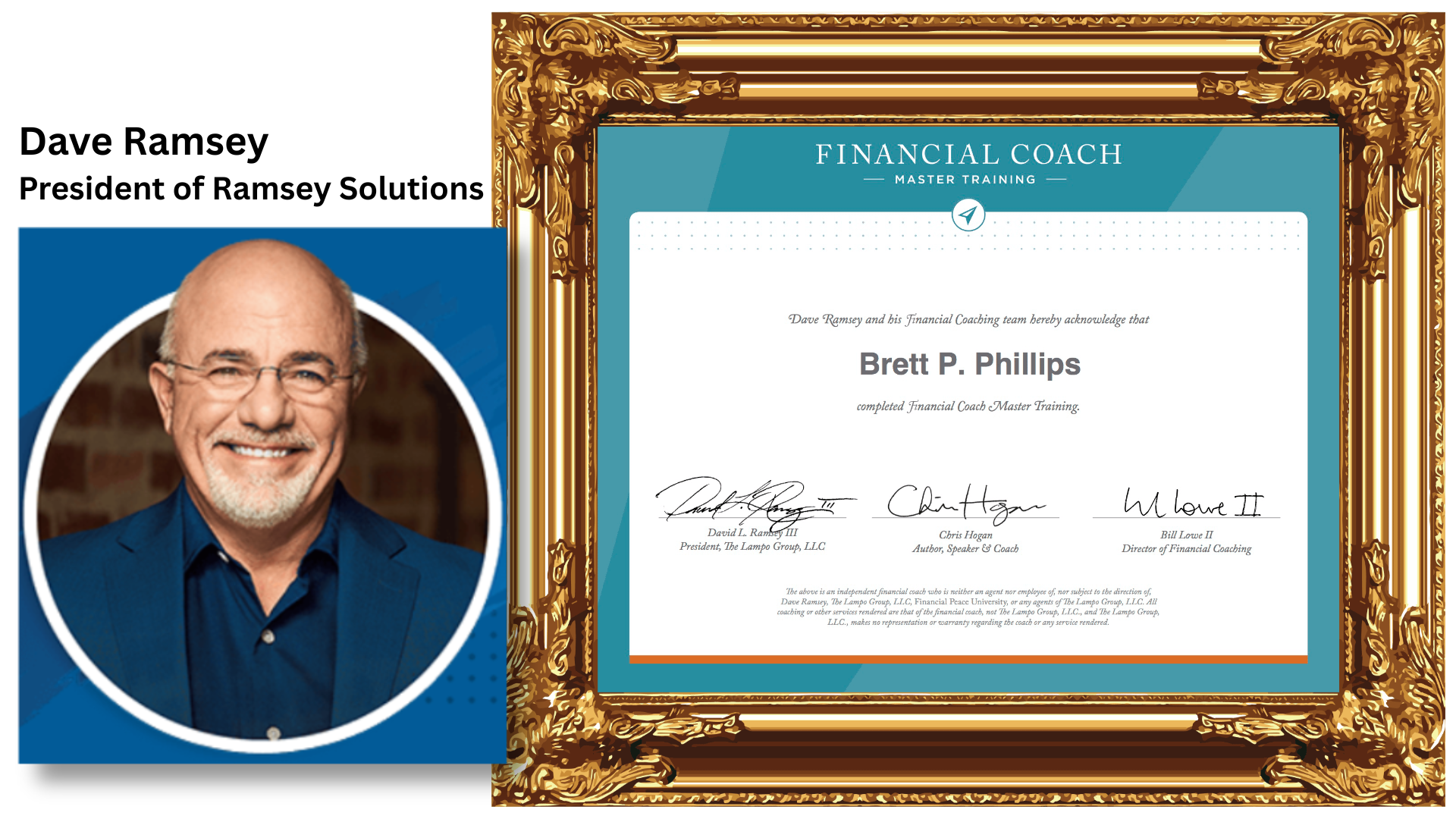
Brett is a Proven Financial Coach
1 of 3. Users of the online course have enhanced at least one of the following 3 assessments
Expense-to-Income Ratio
The expense-to-income ratio is a formula that can help people gauge how efficiently they are mentally configuring their spending in order to generate income. This can be expressed mathematically as expenses a person spends divided by the amount of income sources equals a person’s expense-to-income ratio assessment.

Increase Your Labor Productivity — Without Working More Hours
Work Smarter, Not Harder
Improve your thought configurations and brain computations so you can produce more value, execute better brain computations and increase your economic potential. You already know there are moments when you could make better decisions such as think clearer, focus deeper, or solve problems better. Those moments reveal something important to us: our brain computations and thought configurations can be improved.
This online course is for people who want to earn more income, grow their business, or advance their career skills — but are working longer hours instead of producing more output (i.e., goods, services, value) A component of this obstacle to achieving our labor productivity potential is not more effort or more hours.
It’s that the thought configurations and brain computations used to make decisions, solve clearly defined problems, and create value have not been trained with this original course, Brett equips people to improve their ideation processes that economists know drive labor productivity.
Meet Your Guide
Our training program helps individuals improve the thought configurations and brain computations that influence productivity—skills you already recognize in everyday life when you say things like:
- “I wish I could do better”
- “I should have made a better decision”
- “There must be a smarter way to solve this problem”
These are signals that your brain already knows improvement is possible.
In this program, you will develop a brain cognition framework for self-assessing:
- Configuring solutions to inefficiencies and problems
- Comprehension of future outcomes before their decisions are made
- Neuroplasticity
- Problem-solving approaches
- Computational Analysis
You’ll learn practical economic principles used to measure productivity and apply them directly to your life, work, and business.
Keep Hours the Same or Lower
In economics, productivity is the ratio of what is produced compared to the inputs required to produce it.
One of the most important measures is labor productivity, which reflects the total output produced relative to labor input, such as hours worked.
When your thought configurations improve, the value you produce during the same hours can increase.
That means higher productivity without working more hours.
The Plan
Join the Productivity Training
Fine-Tune Your Thought Configurations and Brain Computations
Increase Your Labor Productivity and Economic Output
What You Receive
- Live online training sessions
- Academic learning materials
- Downloadable resources
- Certificate of completion from Economics, Inc.
Start Improving Your Productivity Today
Your future productivity begins with enriched thinking processes.
If your thought configurations improve, your productivity can improve.
And when productivity improves, your influence can broaden.
Our passion is to enrich your life in many ways!

Results from the Course: 1 out of 231,134,130 People in the U.S.A.

The course that Brett created helped him invent an invention that was awarded a patent.
The course helped Brett with the technical skills, legal skills, ideation phase, scientific method and more.
Brett was #1 from among 231,134,130 people in the United States of America for an invention awarded a U.S. Patent (Publication # US 2018/0108098 A1 www.USPTO.gov)
Awarded Copyright Registration
Progressing Personal Finance, Investing & Macroeconomics to New Heights
Brett was awarded a U.S. Copyright Office Certificate TXu 2-317-655 and TXu 2-395-129 for progressing the social science of macroeconomics, personal finance and investing to new heights.

Benefits of Improving Problem-Solving Brain Skills

.
.
.
Cognitive Benefits (Brain Performance)
- Enhanced Critical Thinking: Employees are better at analyzing situations objectively, questioning assumptions, and using logic to arrive at conclusions.
- Improved Decision-Making: By strengthening the brain’s networks, the training helps individuals evaluate options more thoroughly, manage risk, and make more informed decisions quickly.
- Reduced Cognitive Load & Burnout: By teaching strategies to filter information strategically, employees can manage data overload and reduce mental fatigue.
- Increased Mental Agility: Employees become more adaptable and flexible, able to pivot strategies and respond quickly to new challenges or changes in the marketplace.
Rated Best in Tulsa, OK
.
.
.
.
Organizational & Workplace Benefits to Previous Course Users
- Higher Productivity and Efficiency: Employees can identify and resolve operational bottlenecks and complex issues quicker. This leads to faster project completion and reduced delays.
- Better Collaboration: Structured problem-solving frameworks provide a common language and process for teams. This ensures all members of the team are aligned on the path to a solution.
- Fostering Innovation: Programs that emphasize divergent thinking and creativity encourage employees to think “outside the box,” which leads to unique business solutions.
- Increased Employee Confidence: Training on problem-solving and brain cognition skills helps employees to tackle problems independently. This reduces the need for supervision and contributes to the sense of ownership.

Online Courses that Enrich or A Refund Policy
Frequently Asked Questions (FAQ)
People who have passed tests regarding the laws of financial increase.
People who can pay at least $999 over a time period of 12 months.
No. The course does not focus on getting out of debt with gazelle intensity. Ramsey Solutions does an amazing standard setting job at this objective. Economics, Inc. and Brett focus on increasing appreciating assets.
Appreciating assets.
A customizable financial command center in one dashboard so clients can achieve:
- organization of their main components in a financial plan to use monthly, avoiding “blind spots”
- prevent not adequately understanding or regret about delaying a successful investing journey
- a comprehensive financial plan with a monthly strategy
- eliminate anxiety
- their savings goals faster, prevent loss of opportunity costs regarding achieving savings goals with appreciating assets
Sit back, relax, and enjoy.
Some lessons are live. Some lessons are not live.
We are excited to offer a variety of learning modalities such as V.R.K., Video, Reading, and Kinesthetic.
Within this course’s lessons, the learning modalities include live video and audio through a webinar video conference.
As well as reading, writing, and kinesthetic.
Kinesthetic, as in learning by application of the lessons with the assignments & questions.
Yes! You can complete the course as fast as you want.
No time limit!
You’re busy. We understand.
Course users can learn and apply the assimilation of the lessons at their own pace.
Course users are encouraged to learn and apply their understandings at an enjoyable pace.
Upon completing a course, you will receive a certificate issued by Economics, Inc.
Each time you complete a lesson, you will receive a number of points.
There are 100 points total.
In order to complete the course and receive a certificate with your name, you are required to complete each lesson.
Yes! Here is a link to a few testimonials: https://Economics.Solutions/Testimonials
A few of these job duties are listed below 1 – 8:
- Lowering hours worked while raising the production of a good or service
- Technical work
- Details in processes
- Novel methods
- Administration
- Ideation provides increased productivity with inputs converted into outputs
- Discoveries of new factors and procedures
- Calculation of thought configurations executed in forms of communication such as verbal communication, written communication, and visual communication
King Solomon shares a few of his brain cognition skills in the Bible. A few of the brain cognition skills in the course are listed below, 1 – 5:
- Configuring solutions to the inefficiency problem
- Analysis
- Thought configurations
- Comprehension of future outcomes before their decisions are made
- Reception of knowledge, information, and factors
Increasing team members’ labor productivity by improving their brain abilities aligns with the training initiatives. The term labor productivity refers to comparing the growth in output to the hours worked by team members.